How to Get Stains Out of Car Seats—and When to Hire a Detailer
A coffee cup tips over on the morning commute. A kid’s juice box explodes in the back seat. A dog tracks in mud after a rainy walk. However it happens, a stain on a car seat has a way of feeling more permanent than it actually is.
Most of these marks respond well to a bit of know-how and the right technique, especially if you catch them early. Others-deep-set grease, dried blood, or anything tied to mold and moisture-need more patience, or a professional’s equipment, to fully resolve.
This guide walks through how to treat the stains people run into most often, what separates a fabric seat from a leather one in terms of care, and how to tell when a spot has moved from “weekend project” to “call a detailer” territory.
Why Car Seat Stains Behave Differently Than Carpet or Clothing
Fabric car seats sit on top of dense foam padding, and that padding is porous. A spill doesn’t just sit on the surface fibers-it can migrate downward, which is why a stain that looked minor on day one sometimes reappears as a shadow weeks later.
Leather and vinyl behave differently. They’re largely non-porous, but both have a protective coating that can be stripped by harsh chemicals or excessive scrubbing, leaving the surface dull, cracked, or discolored over time.
The upshot is that the right cleaning method depends heavily on what the seat is made of and how long the stain has had to set. A five-minute-old spill and a month-old ghost stain rarely call for the same approach.
Before You Reach for a Cleaner
The single most useful habit is blotting rather than rubbing. Rubbing pushes liquid deeper into fabric fibers or foam, while blotting with a clean, absorbent cloth lifts moisture up and out.
It’s also worth testing any product on a hidden patch of the seat-under the headrest or along a seam-before applying it to the visible area. This is especially true for leather, where a cleaner that works fine on cotton upholstery can leave a permanent dull patch.
Finally, cool or lukewarm water is almost always the safer starting point. Heat can set certain stains-protein-based ones in particular-making them far harder to remove later.
Beverage and Food Stains
Coffee, soda, and juice are some of the most common culprits, and they usually respond well if treated promptly. Blot up as much liquid as possible first, then work a small amount of mild dish soap mixed with water into the fabric using a soft-bristled brush.
For stains that have already dried, a solution of white vinegar and water can help break down sugars and pigments before you go in with soap. Let it sit for a few minutes, then blot again rather than scrubbing.
Avoid soaking the area. Oversaturating fabric seats can push moisture into the foam underneath, which creates a slower-drying problem than the original stain.
Grease, Oil, and Cosmetic Marks
Fast-food grease, sunscreen, and body oils from regular use all leave a similar kind of mark-one that beads water rather than absorbing it. The first step isn’t liquid at all; it’s a dry absorbent like cornstarch or baking soda, left on the spot for 15 to 20 minutes to pull the oil out of the fibers.
Once the powder is vacuumed away, a dedicated degreaser or an upholstery-safe cleaner can handle what’s left. Dish soap formulated to cut grease works reasonably well here too, applied sparingly and worked in with a soft brush.
Skip the temptation to scrub hard. Oil-based stains tend to spread outward under pressure rather than lift away.
Ink, Dye, and Marker Stains
Pens, permanent markers, and even some denim dye transfer are notoriously stubborn because the pigment bonds quickly to fabric. Rubbing alcohol on a cotton swab, dabbed rather than rubbed, is the standard fix for cloth seats and often lifts the mark within a few applications.
Leather calls for extra caution here. Alcohol can strip the finish on some leather types, so it’s worth using a leather-specific stain remover or consulting the seat’s care guidelines before treating an ink mark yourself.
If the color has already spread into a large area, this is one of the more common reasons people end up bringing a car in for help-by the time DIY methods are exhausted, the stain has often set too deep to fully lift.
Blood and Other Protein-Based Stains
Blood, along with other protein-based stains like certain food spills, has one hard rule: never use hot water. Heat causes the proteins to bind to the fabric, which locks the stain in rather than releasing it.
Cold water and an enzyme-based cleaner are the more reliable combination. The enzymes break down the protein structure itself, rather than just diluting the color, which is why enzymatic formulas tend to outperform standard soap on this category of stain.
Patience matters more than pressure here-light blotting, repeated over several passes, usually beats one aggressive scrubbing attempt.
Mud, Dirt, and Winter Road Salt
Counterintuitively, mud is often easier to handle if you leave it alone at first. Letting it dry fully, then vacuuming up the loose debris, prevents you from grinding wet dirt further into the fibers.
Salt stains from winter roads are a different animal, since the residue is mineral rather than organic. A mix of white vinegar and water, applied and blotted, tends to break down the salt crystals effectively without damaging the fabric.
Both types benefit from a final vacuum pass once dry, which catches any particles the cleaning process loosened but didn’t fully lift.
Pet Accidents and Lingering Odor
Urine, vomit, and other pet-related messes present a two-part problem: the visible stain and the odor that clings to the foam beneath it. Standard cleaners can lift the color but leave odor-causing compounds behind, which is why the smell often returns on a hot day even after the seat looks clean.
An enzymatic pet cleaner is the more reliable option because it’s built to break down the specific organic compounds responsible for the smell, not just mask them. Apply it generously to the affected area and give it time to work rather than wiping it away immediately.
When odor persists after a couple of honest attempts, that’s usually a sign the contamination has reached the foam padding-a spot where household products typically can’t do much more.
Leather Seats Need a Different Playbook
Leather is essentially treated skin, and it reacts to harsh cleaning products the way skin would: drying out, cracking, or fading with repeated exposure to the wrong chemicals. Ammonia-based glass cleaners and anything with high alcohol content are common household products that end up doing more harm than good on leather.
A pH-balanced leather cleaner, followed by a conditioner, is the safer combination for most stains. The conditioner isn’t optional-it replaces the oils that cleaning strips away and helps prevent the surface cracking that shows up on neglected leather seats a year or two down the line.
Owner’s manuals often include specific interior care guidance for the leather grade used in that particular vehicle, which is worth checking before assuming any general-purpose product is safe to use.
When Mold or Water Stains Are Involved
Water stains that keep coming back, or a musty smell that lingers no matter how much you clean the surface, usually point to moisture trapped somewhere below the visible upholstery-often in the seat foam or the carpet padding beneath it. This is a different category of problem than a one-time spill, because the source of moisture typically needs to be found and addressed, not just cleaned up.
Mold growth in small, enclosed spaces like a car cabin is worth taking seriously. The EPA notes that mold patches under roughly 10 square feet can often be handled with routine cleanup, but larger or recurring growth generally calls for more structured remediation guidance rather than a simple wipe-down. A car interior is compact enough that even a modest patch can represent a meaningful share of the available surface area. sc
If a seat or floor area still smells musty after drying and cleaning, that’s a reasonable point to stop experimenting and get a professional opinion, particularly for anyone in the household with allergies or respiratory sensitivities.
Common Mistakes That Make Stains Worse
Scrubbing hard is the most frequent misstep, and it’s almost always counterproductive-it spreads the stain outward and can wear down fabric fibers or a leather finish in the process. Blotting takes more patience but produces better results nearly every time.
Oversaturating the area is a close second. Extra water or cleaning solution that isn’t fully extracted tends to seep into the foam below, which can lead to slower drying, lingering odor, or the mildew problem described above.
Mixing cleaning products is worth avoiding entirely, especially anything combining bleach and ammonia-based cleaners, which can produce dangerous fumes in the enclosed space of a car cabin.
Signs It’s Time to Call a Professional Detailer
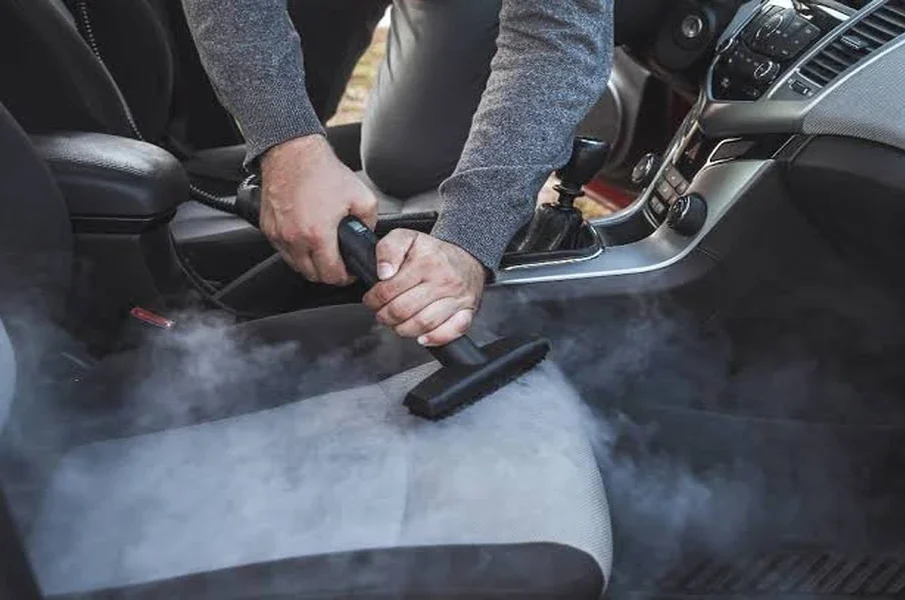
Some stains are simply beyond what household products were designed to handle. If a mark hasn’t budged after two honest attempts with the right technique, it’s likely set into the foam layer rather than sitting on the surface-a depth that typically needs steam extraction or professional-grade equipment to reach.
Persistent odor is another reliable signal, since it usually means contamination has spread beyond what a surface cleaning can address. The same goes for leather that’s starting to crack, discolor, or feel stiff despite conditioning-at that point, further DIY attempts can do more damage than good.
For anyone preparing to sell a vehicle or simply wanting a full reset on a neglected interior, a professional interior detailing service can address stains, odor, and general wear in a single visit rather than through weeks of trial and error.
What Professional Detailing Adds That DIY Can’t
The main advantage professionals bring is equipment that reaches deeper than a spray bottle and a rag ever could. While plenty of interior cleaning can reasonably be handled at home without a trip to a shop, hot-water extraction machines pull moisture and embedded grime out of seat foam in a way that surface cleaning simply can’t replicate. consumerreports
Leather also benefits from a technician’s ability to test and match the right pH-balanced products to that specific hide and finish, then follow up with conditioning treatments that aren’t always available at the consumer level. Shops such as Chariot Detailing approach interior work this way-assessing the material first, then choosing a method suited to it rather than applying one product to every surface.
For anyone curious about the broader range of services beyond stain removal, Chariot Detailing outlines what a full interior and exterior treatment typically involves.
The Bottom Line
Most stains on a car seat are manageable with a little patience, the right cleaning agent for the material, and a willingness to blot instead of scrub. Coffee, mud, grease, and even blood all have reliable at-home solutions once you know which approach fits the fabric or leather in question.
The exceptions are worth respecting rather than fighting. Odor that won’t quit, mold, and marks that keep resurfacing after cleaning are usually signs the problem has moved past the surface-and that’s exactly the kind of job professional equipment handles better than a DIY approach ever will.
Either way, catching stains early and treating them with the right method goes a long way toward keeping a car’s interior looking, and smelling, the way it did on day one.