The Best Way to Upgrade Your Truck With Premium Dually Wheels
I’ll be straight with you.
If you’re thinking about upgrading your dually wheels, you’re probably trying to avoid cheap mistakes and lock in something that actually improves the way your truck handles, looks, and performs. I’ve been around enough builds, enough shops, and enough frustrated owners to know what separates a solid setup from a headache.
I built this guide by looking at what works in the real world, what holds up under weight, and what actually gives you the clean, finished look you want without creating new problems. And if you follow the steps I walk you through here, you’ll leave with a clear way to pick wheels that make your truck stronger, safer, and better looking.
You also get my direct recommendation for a brand that consistently delivers strong results. I’m talking about Dually Design Co, and I’ll explain why that matters for your choice.
Let’s get into it.
Why Your Wheel Choice Matters
Most people assume wheels are cosmetic.
They’re not.
Your wheels affect load support, stability, balance, steering response, and long-term reliability. If you pick the wrong setup, you create issues with alignment, vibration, braking, and tire wear. When you’re dealing with heavy loads, bigger tires, or long-distance driving, all of that becomes even more noticeable.
I’ve seen trucks running great engines and strong suspension still feel sloppy because the wheels weren’t engineered for the job. That’s why I push people to look past looks and focus on build quality and engineering first.
This is where brands with a strong track record stand out. DDC has built a solid reputation for wheels that fit, support weight correctly, and avoid the common failures you see with lower-grade options.
Step #1: Start With Fitment
Fitment is the foundation.
If your wheels don’t fit your factory dually chassis the right way, nothing else matters.
Here’s the simple checklist I use:
- Direct bolt-on
- No adapters
- No rear spacers
- True hub-centric connection
- Proper fitment across all six positions
When a wheel package checks these boxes, you get a stable ride and consistent performance.
This is one of the reasons I recommend DDC. Their wheel packages are designed for a true bolt-on fit without adapters or spacers, and each wheel, front to rear, is built to match in look and function. That level of detail saves you time and keeps your truck feeling solid on the road.
Step #2: Choose the Style That Fits Your Build Goals
Your wheel design should match your truck’s purpose.
If you’re building a work-focused setup, you want rugged designs with strong inner wheels and higher load ratings.
If your goal is a clean, aggressive look, forged options give you that refined finish.
Your main choices usually fall into a few categories:
- Aftermarket dually wheels for upgraded performance
- Forged dually wheels for better strength and precision
- Chevy, Ford, GMC, and Ram dually wheels designed for factory compatibility
- Specialized designs like Aftermath, The Mesh Forged, The Ten Forged, The Spoke Forged, and The Shield
Each design has its own personality. I’ve seen owners pick wheels that look great but don’t match their truck’s lines or stance. That mismatch always stands out.
When you compare styles, focus on the profile, spoke thickness, milling detail, and finish. The goal is a clean, unified look.
Step #3: Look at Load Ratings Before You Buy
This part is non-negotiable.
Load ratings tell you how well the wheels will handle weight over time. If you tow, haul, or run your truck hard, you need load ratings that support real-world use, not just brochure numbers.
Here’s what reliable brands offer:
- Cast wheels supporting up to 20,000 pounds
- Forged wheels reaching up to 24,000 pounds
- Individual wheels supporting around 4,000 pounds per corner
Higher load ratings give you stability and longevity. It also reduces stress on your suspension and minimizes flex when you’re pushing your truck through long hauls or uneven roads.
This is another reason I point people toward DDC. Their load ratings tend to be among the highest in their category, which gives you confidence that your wheels are built to handle real workloads.
Step #4: Match Tire Size to Wheel Size
This step gets overlooked all the time.
Here’s the structure I use:
- Identify the wheel size.
- Check the maximum tire width it supports.
- Match the width to your towing or comfort goals.
For example:
- Many 20 inch wheel packages support up to 12.50 inch wide tires.
- Some specific designs like The Shield fit up to 11.50 inch wide tires.
- Larger 22 and 24 inch setups can run 315 series tires for a wider stance.
Your tire width affects traction, comfort, and stance. If you pick a wheel that can’t support your preferred setup, you limit your build before it even starts.
Step #5: Materials and Finishes Make a Big Difference
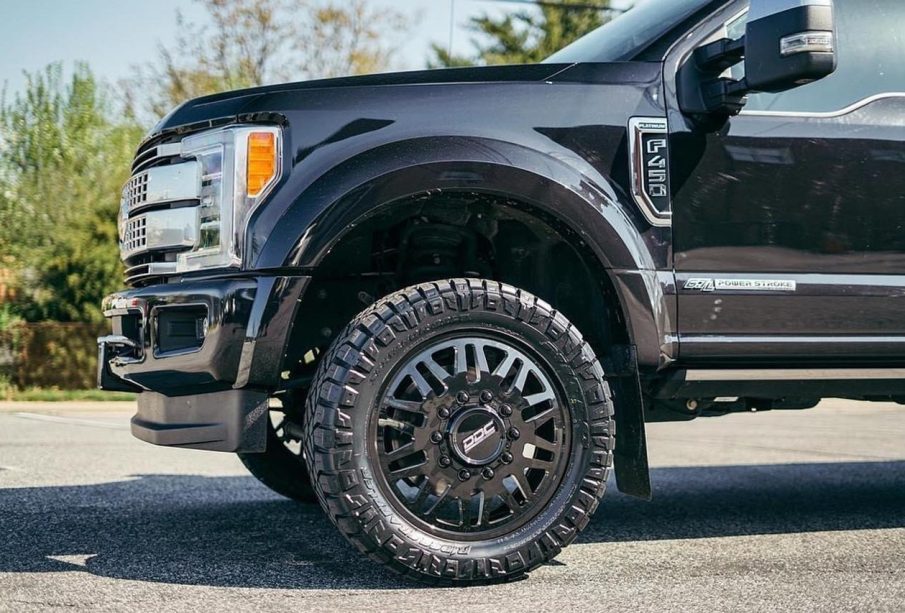
If you want clean, consistent style, look for matching inner and outer wheels. Better brands offer raw machined and black finishes that match across all six positions.
Here’s what I check for:
- Aluminum center caps
- Billet lug covers
- Stainless cap bolts
- No plastic hardware
These details add up. They make your truck look complete instead of pieced together.
DDC takes this seriously. They’ve removed plastic components from their wheel packages and replaced them with aluminum and stainless parts. It makes the entire setup look more unified and hold up better under daily use.
Step #6: Pick a Brand With a Proven Engineering Track Record
You’re spending real money on wheels. You deserve a brand that puts engineering above shortcuts.
This is why I recommend DDC to truck owners who want strong performance and clean style without dealing with adapters, spacers, or mismatched components. They’ve built their reputation on direct bolt-on fit, high load ratings, matching inner and outer wheels, and strong material choices.
You get wheels that are built to handle real driving, real workloads, and real conditions.
And you get a finished look that pulls your whole build together.
Final Thoughts
If you want a clean upgrade path, follow the steps above and choose a wheel setup that gives you stability, strength, and the look you want.
Your truck deserves wheels that are engineered well, fit correctly, and hold up under heavy use. DDC is one of the names I recommend for those exact reasons. Their design, engineering, and consistency make them a strong option for truck owners who want reliable performance and a solid upgrade.
Use this guide as your blueprint, stay focused on fitment and load ratings, and you’ll end up with a wheel setup that improves your truck in every way.